PART 1 – MORALITY
"Morality is an innate human quality."
Morality
Morality is a commitment to oneself, others, nature, and the word around us of which the predominate aspects are:
Taking care - moral behaviour directed at those around us and the world we live in.
Goodness - the sum of a person’s moral commitment and application.
Virtue - the aggregate of the positive parts of our moral character.
Moral conduct is the application of moral principles through a commitment to a standard of behaviour which includes:
Moral rules of conduct are an articulated set of constraints or actions as needed to conform to essential moral behaviours. They guide us away from causing harm to others or the world around us. They provide a quick and easy reference of things ‘to do’ and ‘not to do.’
Altruistic acts are doing things based on our concern for others and wanting to take action to help or support others or the world around us. Altruistic acts include, taking care of others, taking care of nature and the environment and contributing to society.
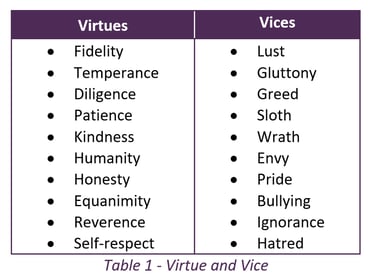
Virtuous qualities of character can be divided in subsets of virtue and vice. Virtues are positive character traits while vice are the negative traits. The sum of virtues and vice is an insight as to character. Virtues and vice are listed below.
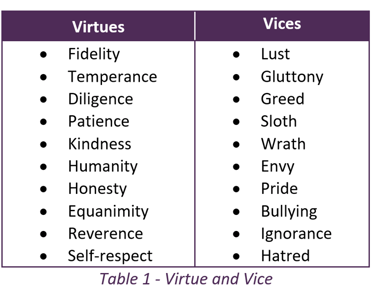
We all have virtue and vice. The tendency to virtue and the denial of vice is the direction needed to be a moral and righteous person (A good person). For every person their goal in life should be:
“A good person with admirable character traits who is at peace with him or herself and lives a happy existence.”
The balance of virtue and vice within us does not remain static and continually shifts. It is a constant battle against temptation and fighting ever changing immoral influences. Choosing a moral path requires an ongoing commitment to improve virtue and deny vice.
Morality Vs Ethics. Morality is a taking care of others, goodness, and virtue. Ethics is adherence to a defined set of behavioral rules (rules of conduct) that may or may not contain moral principles. Moral beliefs can lead to moral ethics (i.e., moral codes of behaviour). Ethics, however, can exist outside moral contexts such as in hobbies and sport. Ethics also exist in immoral practices or beliefs. The two concepts are not interchangeable.
Precepts
‘The Precepts’ are the three principles for the attainment of moral standing. They are the intent of moral behaviour and provide the highest level of guidance. ‘The Three Precepts’ are:
Do no harm - do not injure, damage, or hurt other living creatures or the world around us.
Do good - enact beneficial, kind, or supportive acts.
Be good - the human balance of virtue significantly outweighing vice.
‘The Precepts’ are further divided into the ‘The Particulars.’
The Morality Model
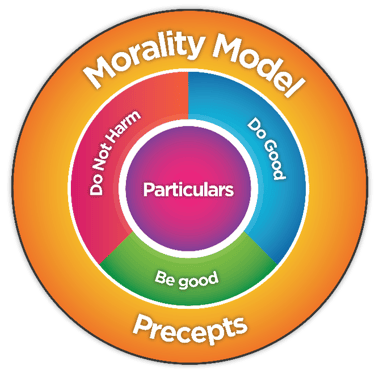
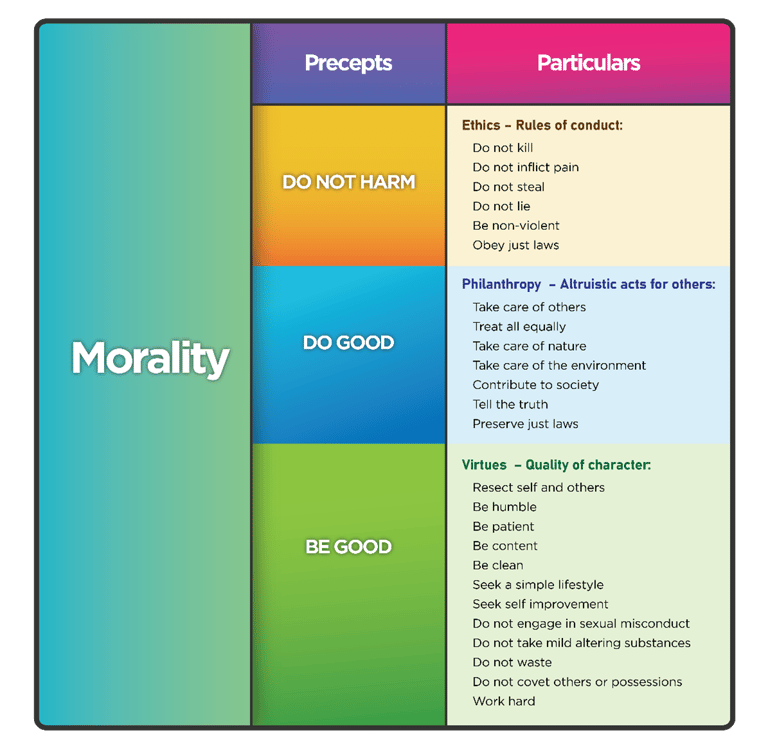
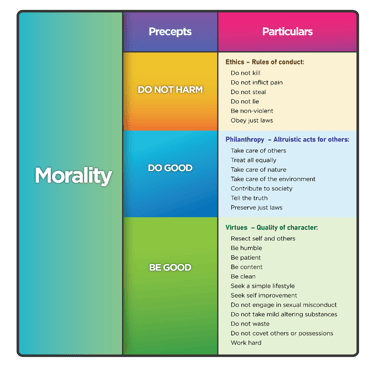
The ‘Morality Model’ shows the interaction between morality, its ‘Precepts’ and ‘Particulars.’

***
Particulars
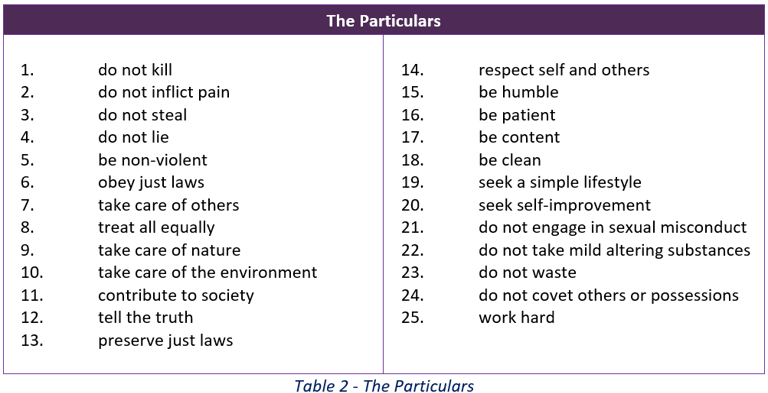
‘The Particulars’ align to the ‘Precepts’; however, the grouping is not strict, and, in some contexts a particular may align to two or more ‘Precepts.’ ‘The Particulars’ consist of:
Rules of conduct
Altruistic acts, and
Virtuous qualities of character.
‘The Particulars’, of which there are twenty-five identified, are a means to apply ‘The Precepts’, which are the higher guidance. They assist to find pathways to improvement. They are not complete but rather examples of the practical application of ‘The Precepts.’ The twenty-five ‘Particulars’ are listed below:
This chapter introduces the definition of morality as three key components: do no harm, do good, and be good. It delves into 25 particulars of ethical conduct, including respect for others, environmental care, and self-improvement. It explores how our virtues shape our actions and contribute to a better society.